
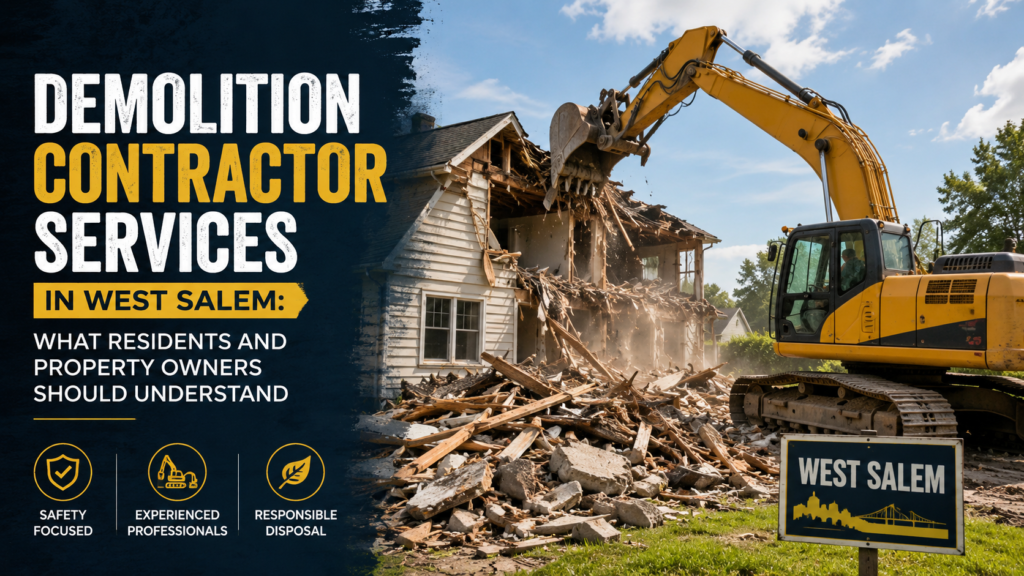
West Salem is a distinct and growing community located across the Willamette River from downtown Salem, within Polk County. Characterized by a mix of long-established residential neighborhoods, riverfront areas, commercial corridors along Wallace Road, and a mix of newer and older development patterns, West Salem presents a variety of demolition needs from residential teardowns and garage removals to commercial site clearing and interior gut-outs.
For property owners, developers, and contractors in West Salem, understanding what professional demolition work involves, what regulations apply, and how to approach a demolition project is essential. This guide covers the key aspects of demolition contractor services as they apply to the West Salem community.
What Is Demolition and When Is It Needed?
Demolition is the deliberate and controlled process of removing or dismantling structures. It encompasses a wide spectrum of work, from removing a single interior wall to completely razing a multi-story commercial building. Common reasons a Demolition Contractor West Salem property owners would engage include:
- Residential teardown: Removing an older or structurally compromised home to make way for new construction
- Garage or outbuilding removal: Taking down deteriorated or unwanted secondary structures on residential properties
- Interior demolition: Removing walls, floors, fixtures, and systems within a structure as part of a remodel or renovation without taking down the building itself
- Commercial site clearing: Removing existing structures to prepare a site for new commercial development
- Deck and patio removal: Dismantling old outdoor structures
- Pool removal: Draining and removing in-ground pools, which are increasingly common as aging pools become costly to maintain
People Also Ask: Demolition Contractor West Salem Questions
What Permits Are Required for Demolition in West Salem?
West Salem falls within Polk County, and because it is a city within the Salem urban growth boundary, demolition projects are subject to building permit requirements administered through the City of Salem’s building division, even for properties on the Polk County side of the river.
A demolition permit is required for the removal of most structures. The permit process typically requires:
- Submission of a permit application describing the structure to be demolished and the method of demolition
- Asbestos and lead survey results for structures built before 1980
- Utility disconnect confirmations (water, sewer, gas, electricity) before demolition begins
- A site plan showing the structure’s location relative to property lines and adjacent structures
Beginning demolition without appropriate permits can result in stop-work orders, fines, and complications when the property is later sold. Working with an experienced demolition contractor who understands the local permitting process streamlines this administrative phase of the project.
What Is Asbestos Abatement and Why Is It Important for Older Properties?
West Salem has many homes and commercial buildings constructed during the mid-20th century, when asbestos was commonly incorporated into building materials. Asbestos was used in insulation, floor tiles, ceiling tiles, roofing materials, pipe wrap, siding, and various other building products.
When structures containing asbestos are demolished without proper abatement, asbestos fibers can be released into the air a serious health hazard that can cause mesothelioma and other severe respiratory diseases. For this reason:
- Oregon requires an asbestos survey by a certified inspector for structures built before 1980 before any demolition permit can be issued
- If asbestos-containing materials are found, they must be removed by a licensed asbestos abatement contractor before demolition proceeds
- Removed asbestos must be disposed of at an approved facility following strict containment and documentation requirements
This process adds time and cost to demolition projects involving older structures but is legally required and critical for worker and community safety.
What Happens to Debris from a Demolition Project?
Responsible management of demolition debris is an important aspect of professional demolition work. Options for debris from a West Salem demolition project include:
- Recycling: Many demolition materials concrete, metal, wood framing can be recycled rather than landfilled. Professional demolition contractors often sort materials on-site to maximize recycling rates
- Salvage: Architectural elements, fixtures, cabinetry, and other components from older structures may have salvage value and can be sold or donated to organizations like Habitat for Humanity ReStores
- Landfill disposal: Materials that cannot be recycled or salvaged are transported to an appropriate waste disposal facility
Oregon has some of the strongest demolition waste recycling requirements in the country, and Polk County and Salem have programs and facilities that support diversion from landfills. Working with a demolition contractor who prioritizes recycling and salvage can reduce disposal costs and environmental impact.
How Is a Demolition Project Typically Sequenced?
Professional demolition follows a deliberate sequence to ensure safety and efficiency:
- Pre-demolition survey: Assessment of the structure to identify hazardous materials, structural elements, and utilities
- Utility disconnection: Disconnection and capping of all utilities serving the structure
- Hazardous material abatement: Removal of asbestos, lead paint, and other regulated materials before demolition begins
- Selective salvage: Removal of reusable or valuable materials before mechanical demolition
- Mechanical demolition: Using excavators, bulldozers, and other equipment to dismantle and remove the structure
- Debris hauling: Transport of debris to appropriate recycling, salvage, or disposal facilities
- Site grading and backfill: Preparing the cleared site for its intended next use
This sequence protects workers, neighbors, and the environment while ensuring the project meets all regulatory requirements.
What Should Property Owners in West Salem Know Before Planning a Demolition?
Before initiating a demolition project, West Salem property owners should:
- Verify property boundaries: Ensure you know exactly where your property lines are before any demolition equipment approaches
- Notify neighbors: While not always legally required for residential demolition, communicating with adjacent property owners about the project timeline is a courtesy that can prevent disputes
- Address drainage: Consider how site grading after demolition will affect drainage on your property and neighboring properties
- Plan for the cleared site: Having a clear plan for what comes next new construction, landscaping, or other use ensures that site preparation during demolition supports the future vision
Working with an experienced local demolition contractor who understands Polk County and West Salem conditions and regulations will make the process significantly smoother and help avoid common pitfalls that can delay projects or increase costs.