VoIP Phone System Savings: A 2026 Switching Guide
Cutting telephone costs without cutting quality is every owner’s dream, and a modern VoIP phone system makes it achievable. By carrying calls over your existing internet connection instead of aging copper lines, businesses in Rawalpindi and beyond routinely slash monthly bills while gaining features that old exchanges could never offer.
This guide takes a money-first view. We will look at where the savings actually come from, how to calculate your return, and how to migrate off an analog PBX without disruption. If cost is driving your decision, read on.
Where the Savings Really Come From
Switching does not save money by magic. The reductions come from several distinct areas working together:
- Lower call charges, especially on long-distance and inter-branch calls.
- No expensive proprietary exchange hardware to buy or maintain.
- One converged network for voice and data, so cabling costs drop.
- Free internal calling between extensions and remote staff.
- Features like voicemail-to-email included rather than billed as extras.
Pakistan’s telecom regulator, the Pakistan Telecommunication Authority, continues to expand broadband access nationwide, which makes reliable internet-based calling practical for more businesses each year.
How Do You Calculate the Return on Switching?
A quick, honest calculation prevents disappointment later. Follow these steps to estimate your payback period:
- Add up your current monthly line rentals and call charges.
- Total the annual maintenance you pay on your old exchange.
- Estimate the one-time cost of new IP handsets and setup.
- Project your new monthly VoIP service and call costs.
- Divide your upfront spend by your monthly saving to find the payback in months.
Most small and medium firms I have advised recover their hardware cost within a year, after which the savings are pure benefit.
Old PBX Versus a Modern VoIP Phone System
The contrast becomes obvious once you lay the two approaches side by side.
| Factor | Legacy Analog PBX | VoIP Phone System |
|---|---|---|
| Line costs | High, per physical line | Low, shared over internet |
| Scaling | New cards and cabling | Add extensions in software |
| Remote work | Not supported | Staff work from anywhere |
| Features | Limited, often paid add-ons | Rich features included |
| Maintenance | Specialist visits | Remote management |
Choosing Cost-Effective Hardware
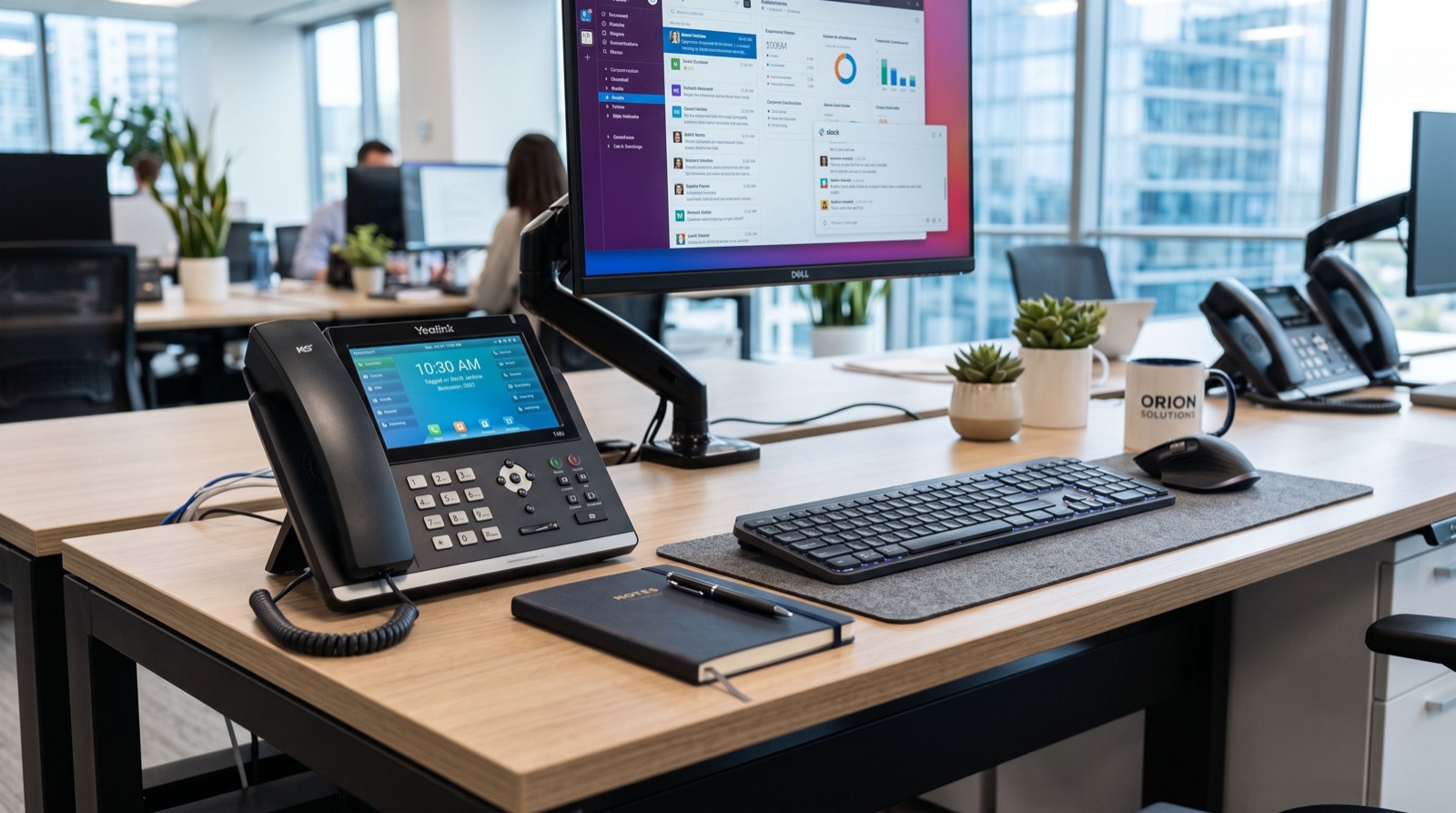
Handsets are a one-time cost, so buy wisely rather than cheaply. Standardising on a proven brand keeps spares and training simple. A dependable range of Fanvil IP Phones in Rawalpindi gives you options for every budget, from basic desk units to feature-rich models.
For directors and client-facing managers, a video-capable handset earns its slightly higher price by replacing separate conferencing tools. The Fanvil V67 Flagship Smart Video Phone is a strong example, adding face-to-face calling right at the desk.
An original cost-saving tip
Do not replace every handset at once. Retire your oldest analog phones first, deploy IP units where call volume is heaviest, and phase the rest over two or three quarters. This spreads the cost across budgets and lets staff adapt gradually.
Migrating Without Disruption
The fear of downtime stops many owners from switching. It should not. A parallel migration keeps your old system running while the new one is tested, so customers never notice a gap.
Start by porting a few numbers, validating call flows, then move the rest once you are confident. Working with reliable local experts during the cutover means someone experienced is watching the network when it matters most.
Protecting call quality
Savings mean nothing if calls sound poor. Prioritise voice traffic on your router, place voice on its own network segment, and back your equipment with a UPS. These low-cost steps preserve the crisp audio customers expect.
Hidden Costs to Watch Before You Switch
The headline savings are real, but a smart owner plans for the less obvious costs too. Budgeting for them upfront keeps your return on target and avoids unpleasant surprises later.
- Network upgrades, such as a PoE switch or better Wi-Fi coverage.
- A UPS to keep phones and routers alive during power cuts.
- Staff training time during the first week of the new system.
- Number porting fees, which are usually small but worth confirming.
- Spare handsets so a single fault never halts your business.
Fold these into your calculation and the payback period you present to management will hold up under scrutiny rather than slipping once the invoices arrive.
Beyond Savings: The Productivity Dividend
Cost reduction gets businesses in the door, but the productivity gains often prove even more valuable over time. Presence indicators let staff see instantly who is available, cutting wasted transfers. Mobile and softphone apps mean a team member working from home is just another extension, fully reachable.
Detailed call reporting is another quiet win. For the first time, many owners can see their busiest hours, longest queues and missed-call patterns, then schedule staff accordingly. That insight alone frequently recovers more revenue than the line-rental savings that prompted the switch.
A note on scalability
Because extensions live in software, adding a new hire is a quick configuration change rather than an engineer visit and new cabling. As your business grows, this flexibility compounds, sparing you the step-change costs that always came with expanding an old analog exchange.
Frequently Asked Questions
How much can a business save by switching to VoIP?
Savings vary, but many firms cut their overall telephony spend substantially once line rentals, maintenance and long-distance charges are combined. The biggest gains usually come from inter-branch and long-distance calling.
Will a VoIP phone system work if my internet goes down?
During an outage, incoming calls can be set to forward automatically to mobiles, so you stay reachable. Pairing your network with a UPS also keeps handsets running through short power cuts.
Can I keep my current phone numbers?
Yes, number portability lets you transfer existing numbers to the new system in most cases, so customers keep dialing the same familiar number.
Is special training needed for staff?
Very little. Modern IP handsets feel familiar, and a short session on transfers, holds and voicemail is usually enough for a team to be comfortable within a day.
Conclusion
A well-planned VoIP phone system trims recurring costs, unlocks modern features and scales far more cheaply than any legacy exchange. Calculate your payback, choose reliable hardware, phase the rollout, and protect call quality. Make that move in 2026 and the savings will strengthen your bottom line month after month.
One last piece of advice from the field: document your dial plan and configuration before you decommission the old exchange. A clear record of extensions, ring groups and after-hours routing makes future changes painless and protects you if a key staff member moves on. Treat that documentation as part of the project, not an afterthought, and your new VoIP phone system will remain an asset you fully understand and control for years to come.